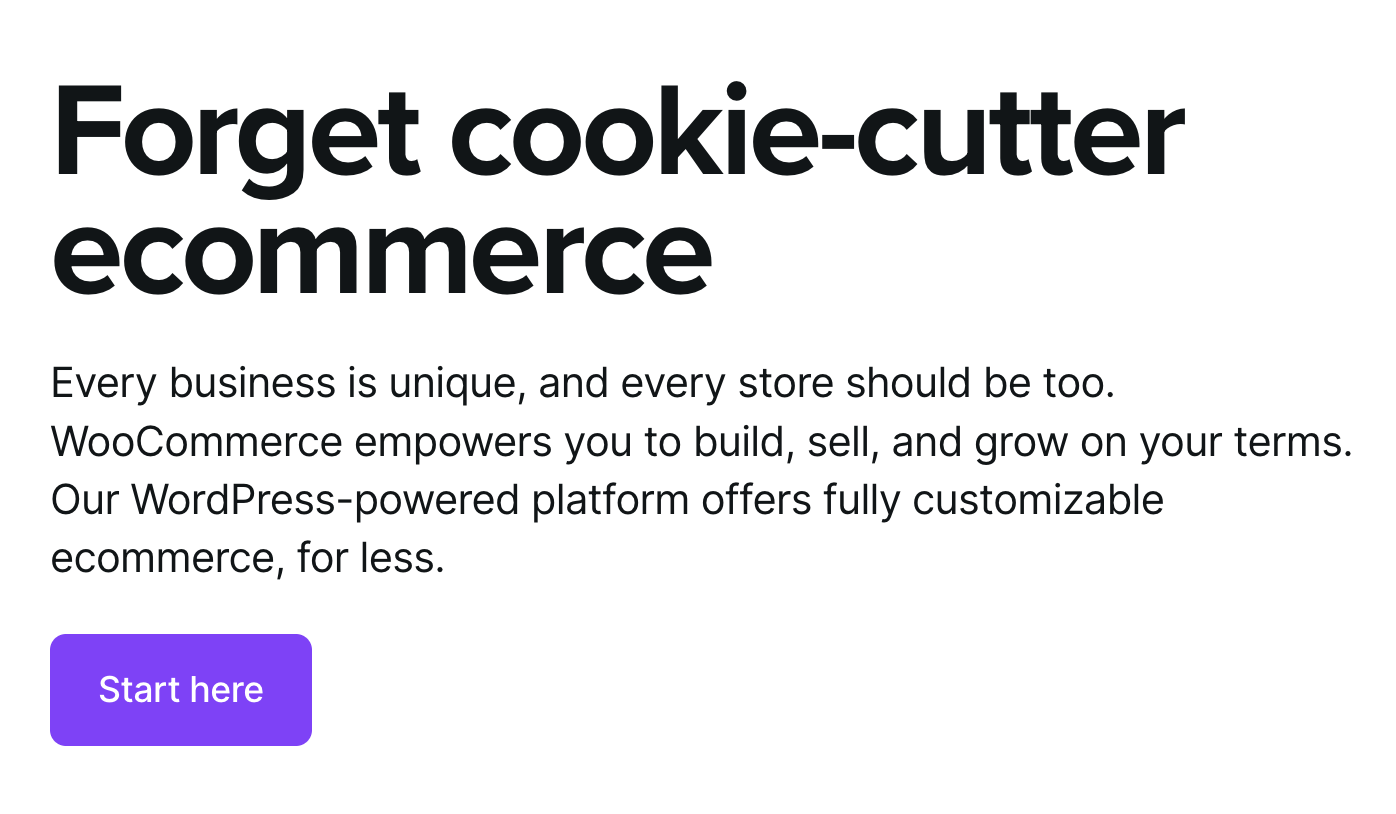
When WooCommerce markets its “customizability,” they’re technically correct, but it’s like saying you can build any house you want if you happen to be an architect, contractor, and interior designer all in one. This kind of marketing creates dangerous expectations.
When small business owners choose a platform based on promises of unlimited customization only to discover they need significant technical expertise or expensive help to achieve it, the consequences can be severe: abandoned projects, wasted investments, delayed launches, and shattered confidence. It’s the digital equivalent of buying land and materials for your dream home, only to realize you can’t actually build it yourself. This disconnect between marketing and reality leads to frustration and can jeopardize entire business ventures.
Instead, focusing on control and ownership provides a more honest value proposition:
The Real Estate Analogy
Imagine two paths for your retail business:
Option 1: Renting Space (Hosted Solutions)
- You set up shop in someone else’s building (Shopify, BigCommerce, etc.)
- Quick setup, low initial investment
- Professional appearance with minimal effort
- BUT: Subject to the landlord’s rules and changes
- Limited control over infrastructure
- Potentially rising “rent” (subscription costs) over time
- Risk of being “evicted” if you violate terms of service
- Your business success is partially dependent on decisions made by others
Option 2: Owning Your Building (WooCommerce)
- You build on your own property (self-hosted WordPress)
- Complete ownership of your digital assets
- Freedom to renovate as needed (when you have the skills or help)
- No risk of unexpected policy changes affecting your core business
- Fixed costs that don’t scale with your success
- Long-term security and stability
- Your business success depends solely on your decisions
The Value of Control
The real value of WooCommerce isn’t just that you “could” customize everything (which most store owners won’t do), but rather:
- Decision autonomy: You decide when and if to update
- Data ownership: Your customer information is truly yours
- Infrastructure independence: Not vulnerable to another platform’s outages or changes
- Cost predictability: No percentage of sales going to your platform
- Exit strategy: No platform lock-in if you want to change systems
This reframing acknowledges that most store owners will use themes and plugins rather than custom code, but emphasizes that the freedom to choose your own path is the true advantage—even if you never exercise every option available to you.
Leave a Reply