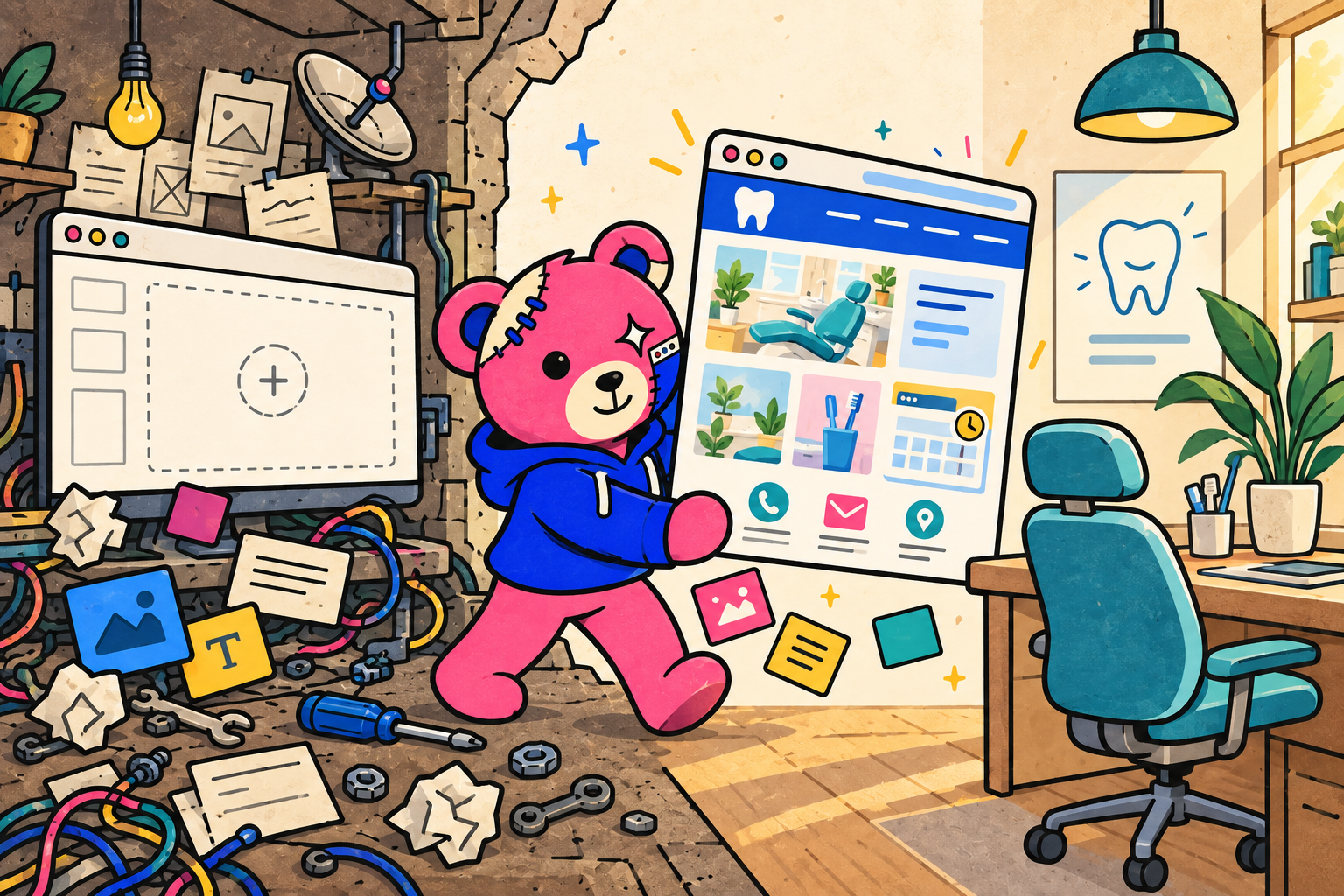
Sign up for Squarespace and you pick a template. It comes as a whole site: a restaurant with photos and a menu, a photographer’s portfolio, a yoga studio with a class schedule. You replace their words with yours and their pictures with yours, and you’re done by dinner.
Install WordPress and you get a post called “Hello world!”, a Sample Page, and a very nice theme with nothing in it. For years we’ve called that a blank canvas and treated it as the feature.

I’ve done this too. I’ve told people to grab a block theme and make it their own, and I meant it as help. But most people who ask for a website don’t want to make anything. The dentist wants patients to find her and think the practice looks legit. The website just has to exist. When we hand her a clean, minimal theme, we’ve handed her a project. It looks great in the screenshot because the screenshot has demo content in it, and her install doesn’t.
Who gets to feel at home?
I think we miss this because of who’s in the room. WordPress people are the people who liked the empty dashboard. The ones who felt dread and went to Squarespace aren’t at WordCamp, so we never hear from them and start believing they don’t exist. It shows up in the words on our products too: build your site, start building, create something. Each one gives the visitor a chore.
Editing is a much easier job than authoring. Anyone can look at a finished page and say that headline is wrong, that isn’t my photo, this should say Tuesdays. Staring at an empty page and deciding what goes on it is hard, and most people decide they’re bad at it.

Change the default
So here’s what I’d like us to change.
If you make themes, ship every one with its demo content ready to go, so activating it gives you the site in your screenshot. Make the empty version the option people have to go looking for.
If you run a host, let people pick a finished starter site at signup, the way they’d pick a template anywhere else, and drop them into a site that already looks like where they’re headed.
If you work on core or on onboarding, go through the first ten minutes after install as a stranger who has no interest in the word “block.” If the first thing they see is an empty page, treat it as a bug.
If you’re an agency or a freelancer, stop selling a custom build to people who want a site. Sell them a finished one and let the custom work be what you add once they’re live.
And if you write docs, plugin descriptions, or marketing copy, count how many times you tell people to build. Replace most of them with what the person actually gets.
Builders will be fine. We have always been well served, and the blank canvas isn’t going anywhere. The people we keep losing to Squarespace and Webflow are asking for a site, and we keep handing them a kit. Change the default. Start people with something finished and let them make it theirs.

END OF TRANSMISSION · FILE SAVED
Transmission complete.
The workshop keeps humming. Teddy stamps the paper and pretends this was all according to plan.
ONE-TAP PRIVATE SIGNAL
What kind of noise did this make?
One click sends Nick a tiny private light on the console. No account, count, leaderboard, or public performance.

INCOMING TRANSMISSION
What did this signal make you want to build, remove, or argue with?
Send Teddy a note about Not Everyone Wants to Build. It goes straight to Nick’s normal email inbox. No admin screen and no public comment thread.
KEEP THE RECEIVER ON · RSS ↗