
I put a Casio on the internet
You can press the buttons. Go ahead. Here’s the watch. It’s a Casio AE-1200, the chunky digital watch people call the Casio Royale. I made a browser version you can poke around in. You can switch modes, try the stopwatch, and turn on the little amber light. I could send you a screenshot of the […]

You can press the buttons. Go ahead. Here’s the watch.
It’s a Casio AE-1200, the chunky digital watch people call the Casio Royale. I made a browser version you can poke around in. You can switch modes, try the stopwatch, and turn on the little amber light.
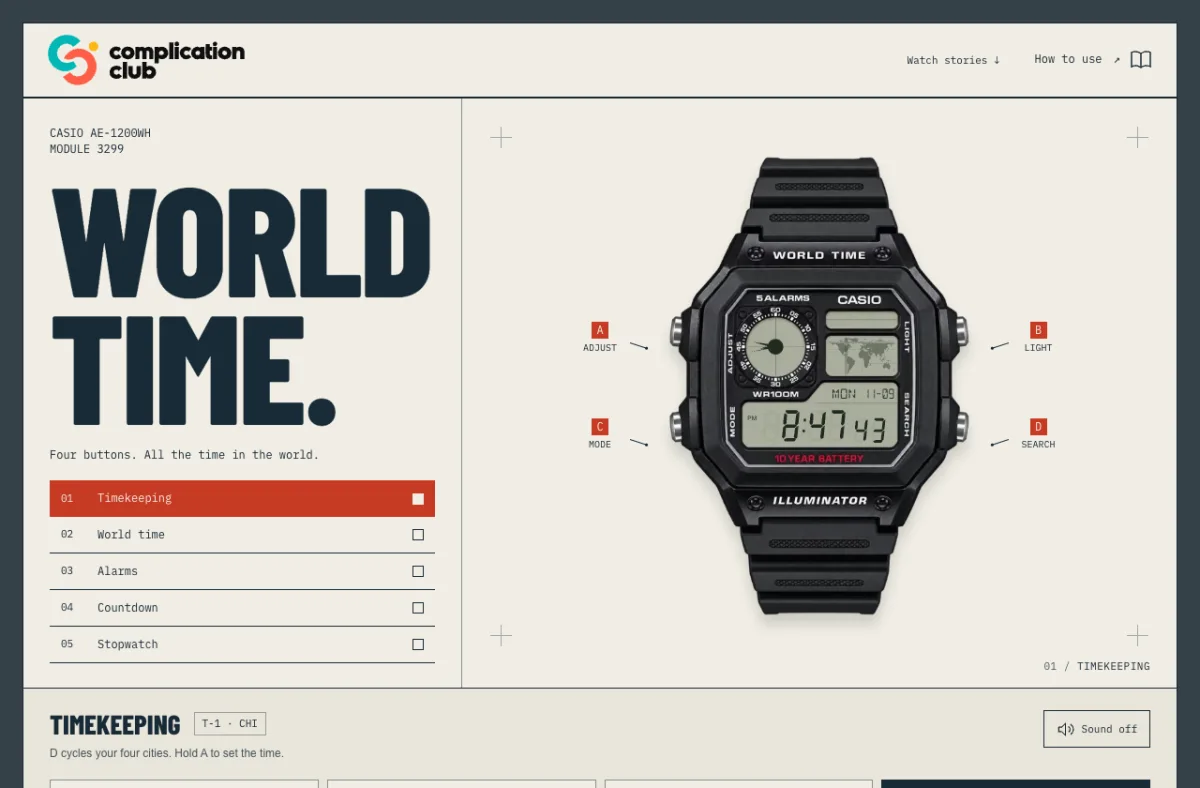
I could send you a screenshot of the watch and tell you the buttons work. With a link, I can just say, “Press the light button.”
That’s why we launched Spacefast. Spacefast is a web hosting platform for the websites and apps you make with AI. You build in the AI you already use, like ChatGPT or Claude. When you ask it to publish with Spacefast, it puts the project online and gives you a link.
“Can you send me the link?”
You can spend an afternoon making something with AI and get all the way to a working game, a calculator, or a tool that saves you ten minutes every Monday. Then a friend asks to try it, and you realize the only place it works is in the preview you’ve been staring at for two hours.
Now there’s a second project. Figure out where the files go. Figure out who can see them. Figure out how to get a fix online tomorrow without texting everybody a new address. If the thing you made was a digital watch you built for fun, that might be about where you decide it was fun enough.
Each project gets a home called a Space. It starts private. You can send a link to one person for feedback or make the site public when you’re ready. Every publish saves a version, so you can fix something at the same address and go back if you need to.
For the watch, hosting the site is enough. For an app that needs to remember things, Spacefast can also provide a database. If you want the project to have its own address, you can connect a domain. You can start with a link for a friend and add what the project needs as it grows.
I’ve been using it to put very different things on the web. Each one taught me something about what becomes possible once there’s a link.
I wanted to send someone an arcade cabinet

I made Fall Into Place, a falling-block game with its own soundtrack, chunky buttons, and a cabinet that looks like it belongs in a corner of a pizza place. The cabinet is half the fun.
I can send it to someone and they can play a round right there, on a phone or at a keyboard. The game and the cabinet and the music all go together. That’s what I wanted to share. A video would show how it looks, but it couldn’t give somebody that little moment when the piece they’ve been waiting for finally drops. Play Fall Into Place.
I wanted a tool that fit the way I work
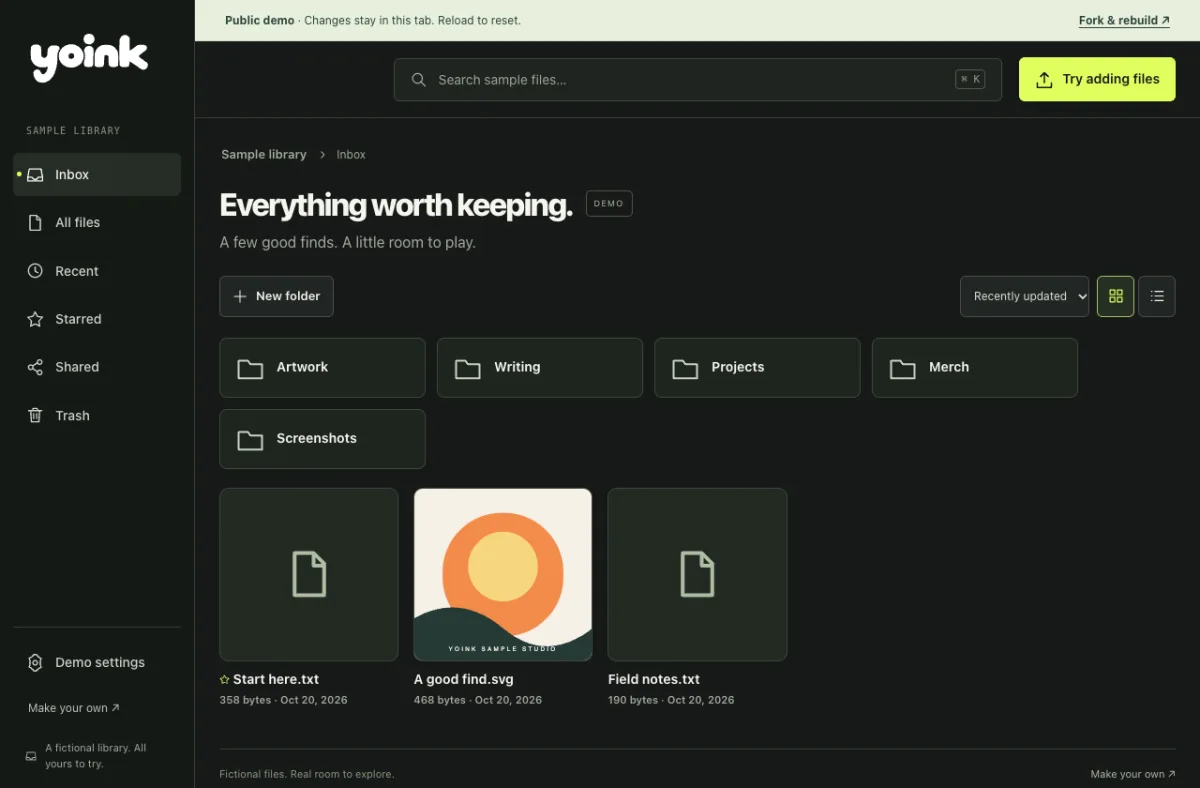
I made Yoink, a private library for creative files. I want to keep the original, put it somewhere I can find it again, and choose exactly which version somebody else gets. Those are three different jobs, even if they all start with the same file.
Yoink has a public demo with a sample library, so you can try adding files and moving things around. That’s a different use for a link than the arcade game. Here, I want the work itself to have a private home and the demo to be something anyone can poke around in. Making both possible matters when what you’re building is useful precisely because it holds things you care about. Try the Yoink demo.
We wanted the comic to have an address
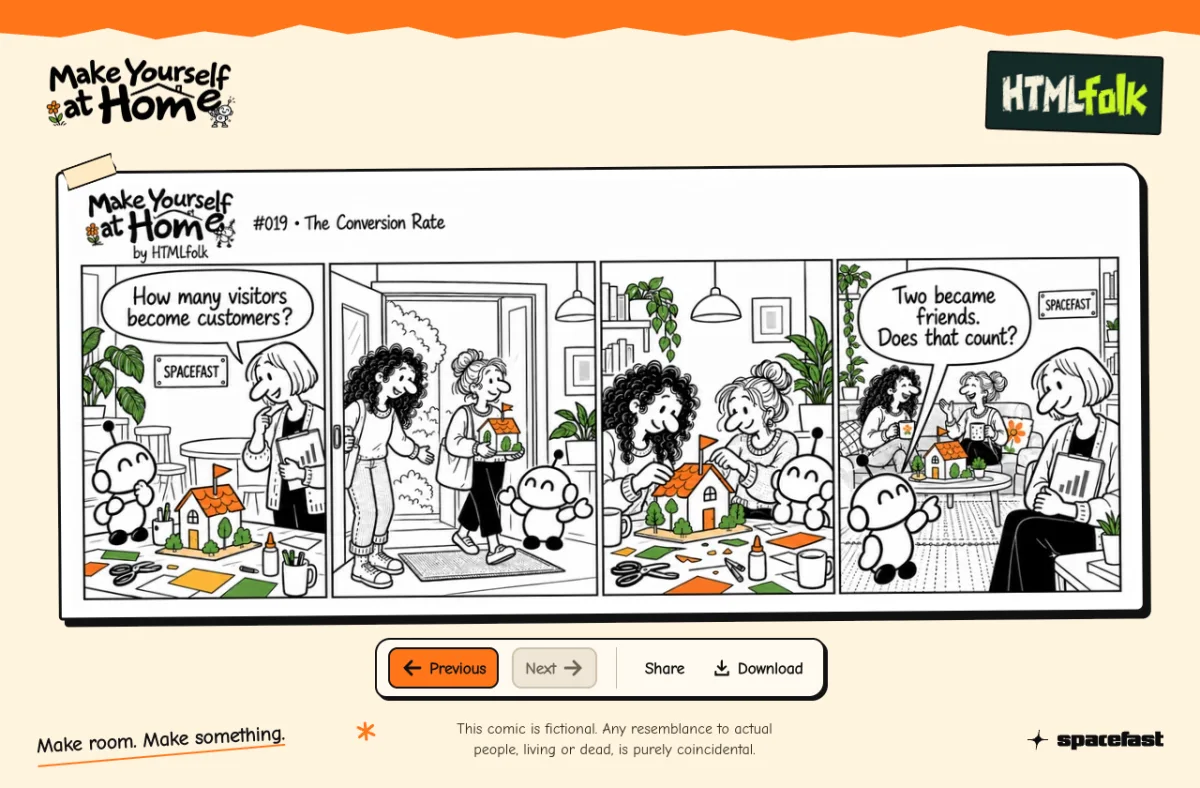
Make Yourself at Home is our comic about making things and finding your place on the web. We gave it a little reading room of its own. You can start with a strip somebody sent you, go back through the archive, or download the one you want to keep.
A strip can make its way around on its own. Giving the comic an address means a reader who likes one strip can find the rest and come back for the next one. We also get to decide what the place feels like. It can look as much like the comic as we want it to. Read Make Yourself at Home.
The first link is where it gets interesting

Say you make a tournament planner for your club. You share it privately with one other organizer. They open it on their phone and leave a comment where the schedule is hard to read. You ask your AI to fix it and publish again. They open the same link to check the change. If the new layout makes things worse, you can go back to an earlier version.
That’s when the project starts to change in ways you couldn’t have planned from inside the chat. Someone actually uses it. They find the tiny button you never noticed was too small, or ask whether the planner can remember who signed up last week. The first thing is a layout fix. The second might mean giving the app a database, which Spacefast can provide when you need it.
I want more of the web to come from people who had a particular thing in mind. A game for their friends. A better way to keep track of their files. A home for a comic. A watch with a little amber light. When publishing is easy enough to do while you’re still excited about the idea, more of those things get a chance to find their people.
If you’ve got something sitting in a chat right now, ask your AI, “Publish this with Spacefast and give me a link I can share.” Then send it to the person you had in mind. Get started with Spacefast.

END OF TRANSMISSION · FILE SAVED
Transmission complete.
The workshop keeps humming. Teddy stamps the paper and pretends this was all according to plan.