
I have not been this excited about an operating system in a long time.
Most of what goes into Omarchy is familiar: Linux, tiling windows, themes, shortcuts and configuration files.
But I like how it puts those things together.
It calls itself “the malleable OS for the age of agents.”
That word stuck with me.
More than customizable
Customizable software usually lets me change a color, move a toolbar or turn off notifications.
I can choose from what the settings screen offers.
I like the word “malleable.”
Malleable suggests I could change how the software works too.
Omarchy comes with a desktop layout and controls I can start using right away. I don’t have to assemble the whole setup myself.
I can change it afterward.
An agent can help me make those changes even when I don’t know which file under .config controls the thing I want to adjust.
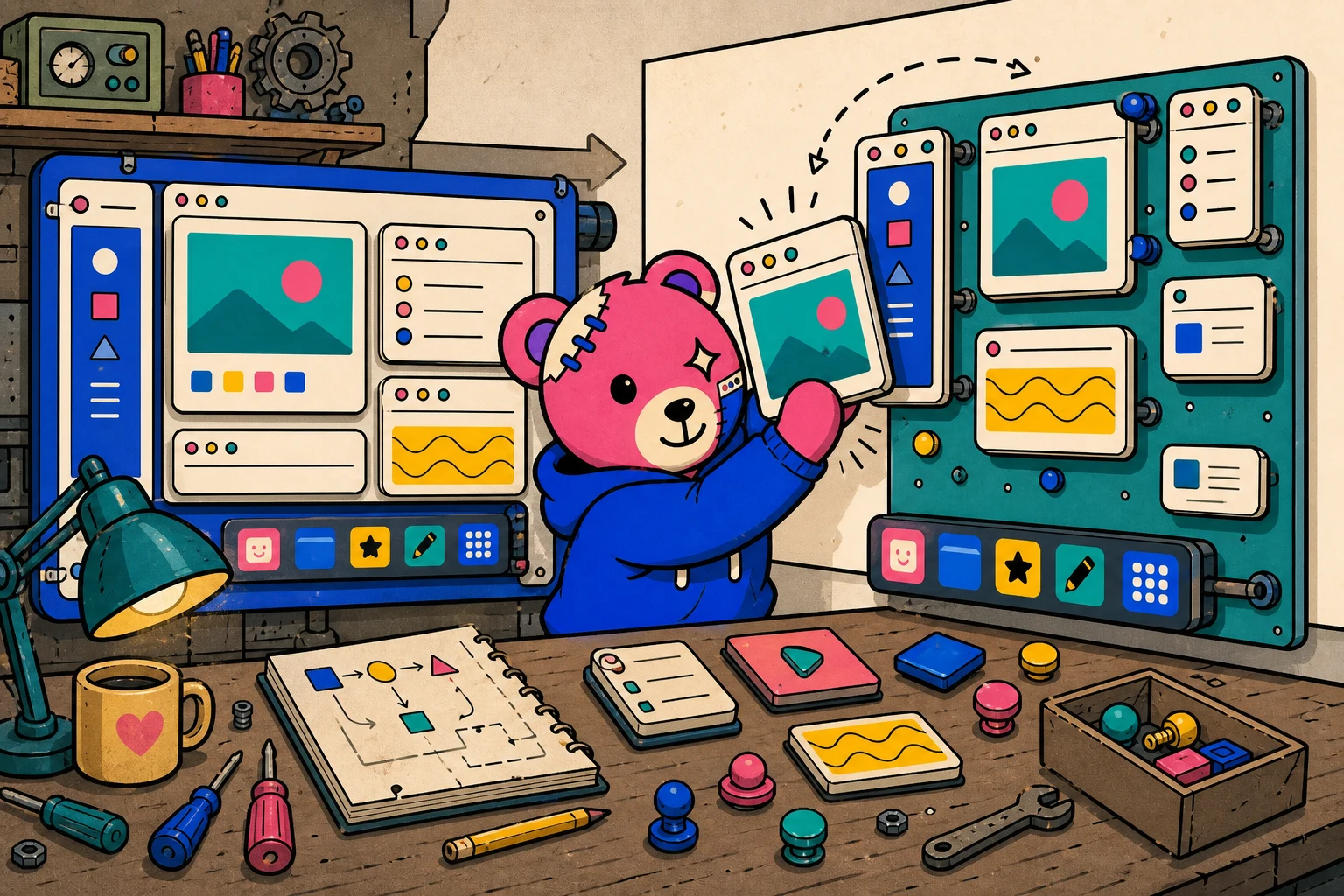
What that means for OpenStation
The more I thought about it, the more it sounded like what I want for OpenStation.
OpenStation is what I’d call a malleable operating system for WordPress.
It runs inside WordPress and turns /wp-admin into a desktop with windows, a dock, virtual desktops, files, commands, themes, widgets and tools.
People use wp-admin to write, publish, run stores and manage memberships. It’s a working environment, even if we don’t usually call it that.
I’d like people to be able to arrange it.
I usually describe OpenStation by its features. You can open the Media Library beside a post, leave work on another virtual desktop and come back to it later, or move the dock and change the theme.
Those are ways to give people more control over their work.
The question I keep coming back to is: What if the place where you run your website behaved like something you own?
A starting point people can change
Here’s what I want it to do.
Remember where I put things. Let me see two tools at once. Help me return to a job without opening everything again.
Plugins can add windows, widgets, commands, wallpapers, settings and tools. An agency could give a client a workspace for the few jobs they do regularly. People on the same site could arrange their work differently.
We already change WordPress themes, templates and data to suit a website.
The admin gives us much less room to do that.
I’d like the admin to offer that freedom too.
The age of agents
Agents could make those changes easier to ask for.
Until now, changing how software works usually meant learning its configuration or writing the code yourself.
I’d like someone to be able to ask for changes like these:

“Make a workspace for editing this magazine.”
“Keep orders and inventory together.”
“Give this client one place to change the menu, the hours and the homepage.”
“Put the tools I use every morning on the first desktop and everything else somewhere I can still reach.”
The software needs to let the agent carry out those requests.
Omarchy applies that idea to a personal computer. I want to try it inside WordPress with OpenStation.
What I want to build
This is why I’m excited about Omarchy.
It looks good and gives me useful defaults.
I can start there and change it as I learn what works for me.
I want OpenStation to feel like that.
I want people to start with a useful workspace and change it to suit their work, including what it can do. That goes beyond changing the wallpaper or colors.
Omarchy helped me put a name to it.
If you’d like to try it, try OpenStation. Open two windows, move something and leave your work arranged. Come back later and see how it feels to continue from there.

END OF TRANSMISSION · FILE SAVED
Transmission complete.
The workshop keeps humming. Teddy stamps the paper and pretends this was all according to plan.
ONE-TAP PRIVATE SIGNAL
What kind of noise did this make?
One click sends Nick a tiny private light on the console. No account, count, leaderboard, or public performance.

INCOMING TRANSMISSION
What did this signal make you want to build, remove, or argue with?
Send Teddy a note about Omarchy Gave Me a Name for OpenStation. It goes straight to Nick’s normal email inbox. No admin screen and no public comment thread.
KEEP THE RECEIVER ON · RSS ↗